
2026 KGM Torres Hybrid Review: Cheaper Than the Kodiaq, Now Also Fuel-Efficient
2026 KGM Torres Hybrid Review: The Torres Finally Fixes Its Biggest Weakness. A Full Hybrid Cuts Consumption from 9 to 6.2 L/100 km – and It’s Still Affordable.
The former SsangYong, now KGM, is finally introducing a hybrid version of the Torres that dramatically reduces fuel consumption. From the original 8–9 L/100 km, the official figure drops to 5.9–6.1 L/100 km, and in our real-world test we achieved 6.2 L/100 km. This means the Torres HEV can finally compete with the Dacia Bigster and Škoda Kodiaq – while still maintaining a very attractive price.
SsangYong has rebranded itself as KGM, and its sales have declined quite significantly. The name change certainly played a role, but it didn’t help that a brand positioning itself as an SUV specialist was hit by a wave of new Chinese brands entering the market over the past year, most of them offering SUVs as well. Another major obstacle holding the KGM Torres back was its petrol engine, which had no problem asking for up to 9 litres of fuel per 100 kilometres. There is also the electric EVX version, but not everyone wants a fully electric car, just as not everyone wants to go through an LPG conversion – even though the Polish importer, for example, offered it directly at purchase.
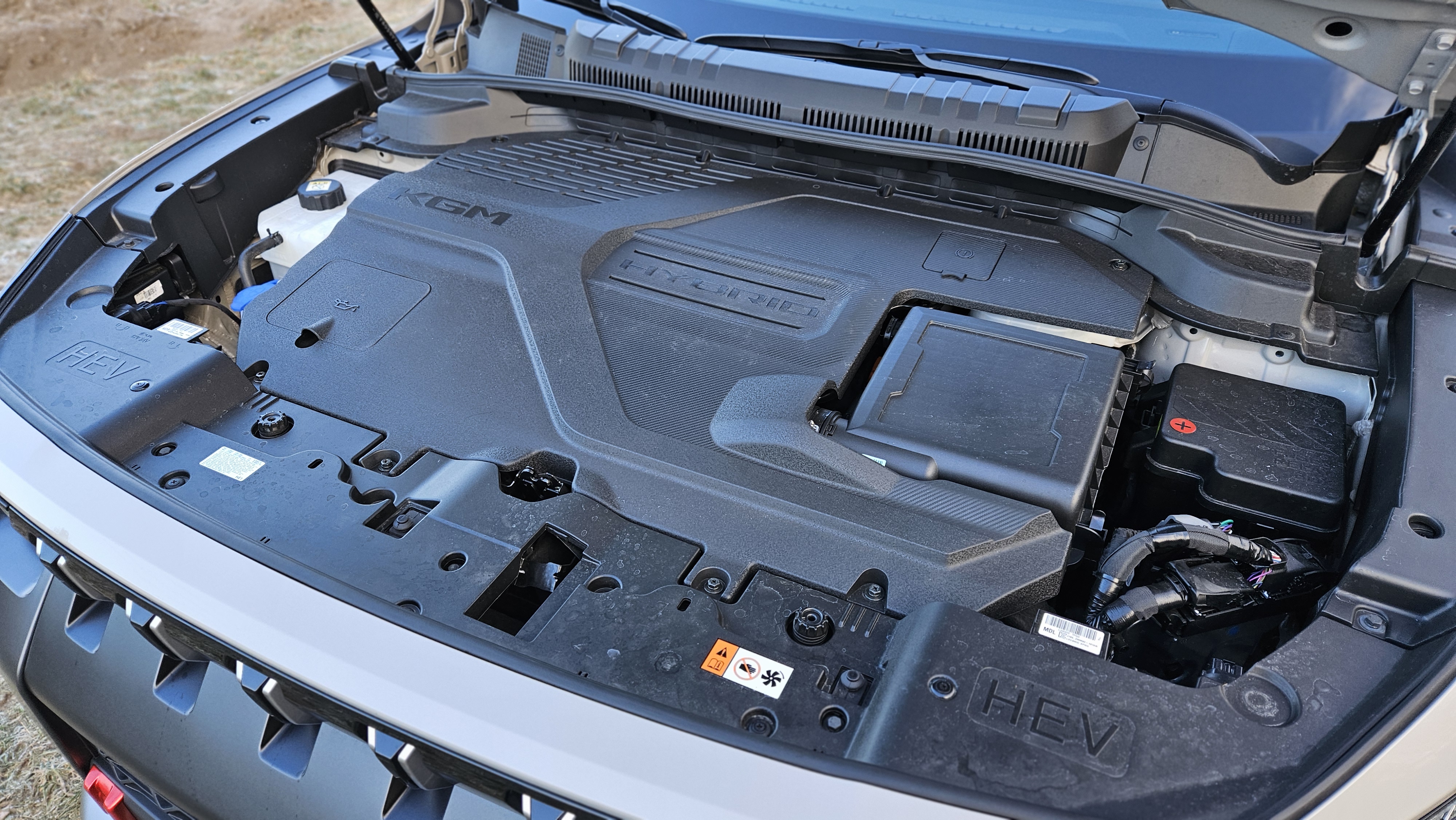
That may now change with the new powertrain introduced under the hood of the Torres at the end of 2025. The full-hybrid system is based on the technical foundation of a plug-in hybrid from Chinese manufacturer BYD, although the rest of the development was reportedly carried out entirely by KGM. The basis is once again a 1.5-litre petrol engine, but with completely different bore and stroke compared to the original unit. An electric motor, a generator and a 1.83 kWh battery have been added – incidentally more than what Hyundai or Toyota use in their hybrids. Everything is paired with a DHT automatic transmission. Thanks to the electric assistance, total system output has increased from 120 to 150 kW, while consumption has gone in the opposite direction, dropping from an official 8–8.5 L/100 km to 5.9–6.1 L/100 km.
2026 KGM Torres Hybrid Review: How Efficient Is It Really?
And these figures are not far from reality. I finished the test week with an average consumption of 6.2 L/100 km, ranging from 5.7 L on secondary roads to around 7 L on the motorway. Sure, there are hybrids that can be even more economical – I would point to the hybrid systems in the Dacia Bigster or Renault SUVs – but the Korean manufacturer has done a solid job of eliminating the biggest issue customers had with this car.
Both power sources work well together, and the battery is relatively large, so crawling through traffic jams can often be done purely on electric power. Press the accelerator, however, and the car delivers decent punch both from a standstill and when overtaking. Unfortunately, the manufacturer does not quote acceleration figures, only a top speed of 180 km/h. Cabin noise is generally well controlled; only occasionally does the engine rev more than you might expect based on throttle input, but that’s simply the car charging the battery while driving.
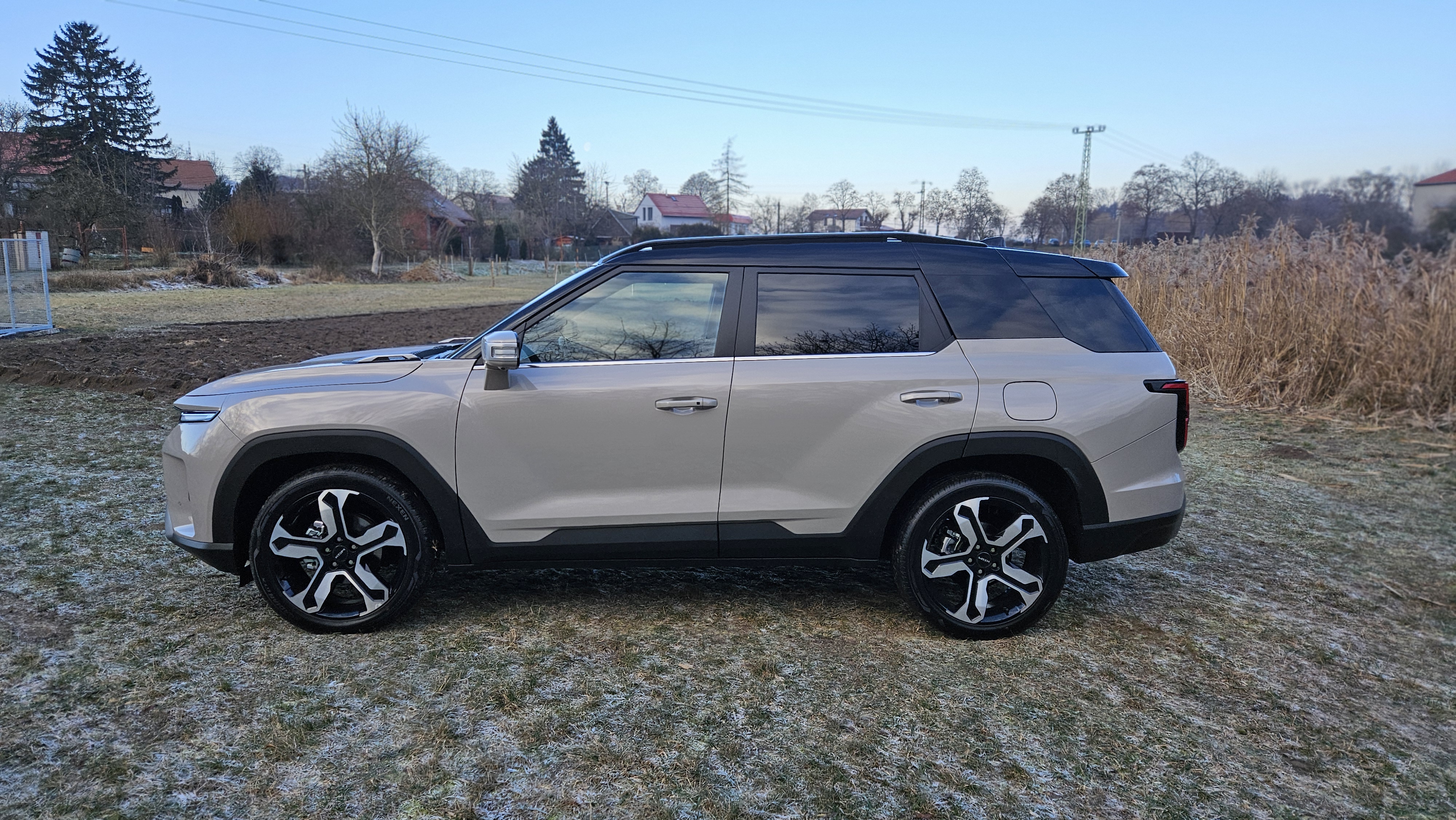
For a family SUV, the driving characteristics are solid, and the Torres holds its own against traditional rivals. The suspension is well tuned, and only really large potholes made themselves felt in the cabin. It’s definitely better to opt for the 18-inch wheels rather than the visually more striking 20-inch ones. Body roll is noticeable in corners, but this is not a sports car – it’s a family cruiser. The only real drawback is that while the base petrol engine can be paired with a manual gearbox and all-wheel drive, the hybrid is always offered with an automatic transmission and front-wheel drive only. AWD would suit the car, as the front wheels can struggle for traction on wet surfaces when pulling away briskly due to the high torque of the electric motor.
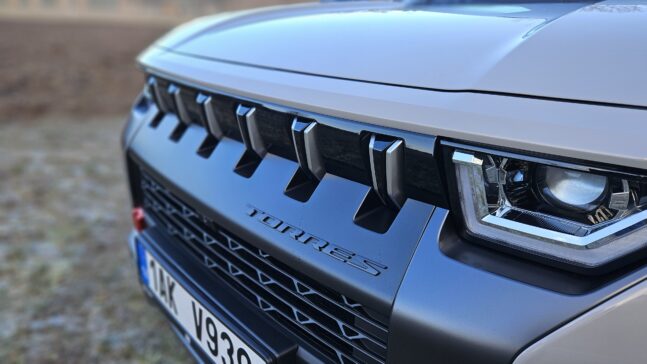
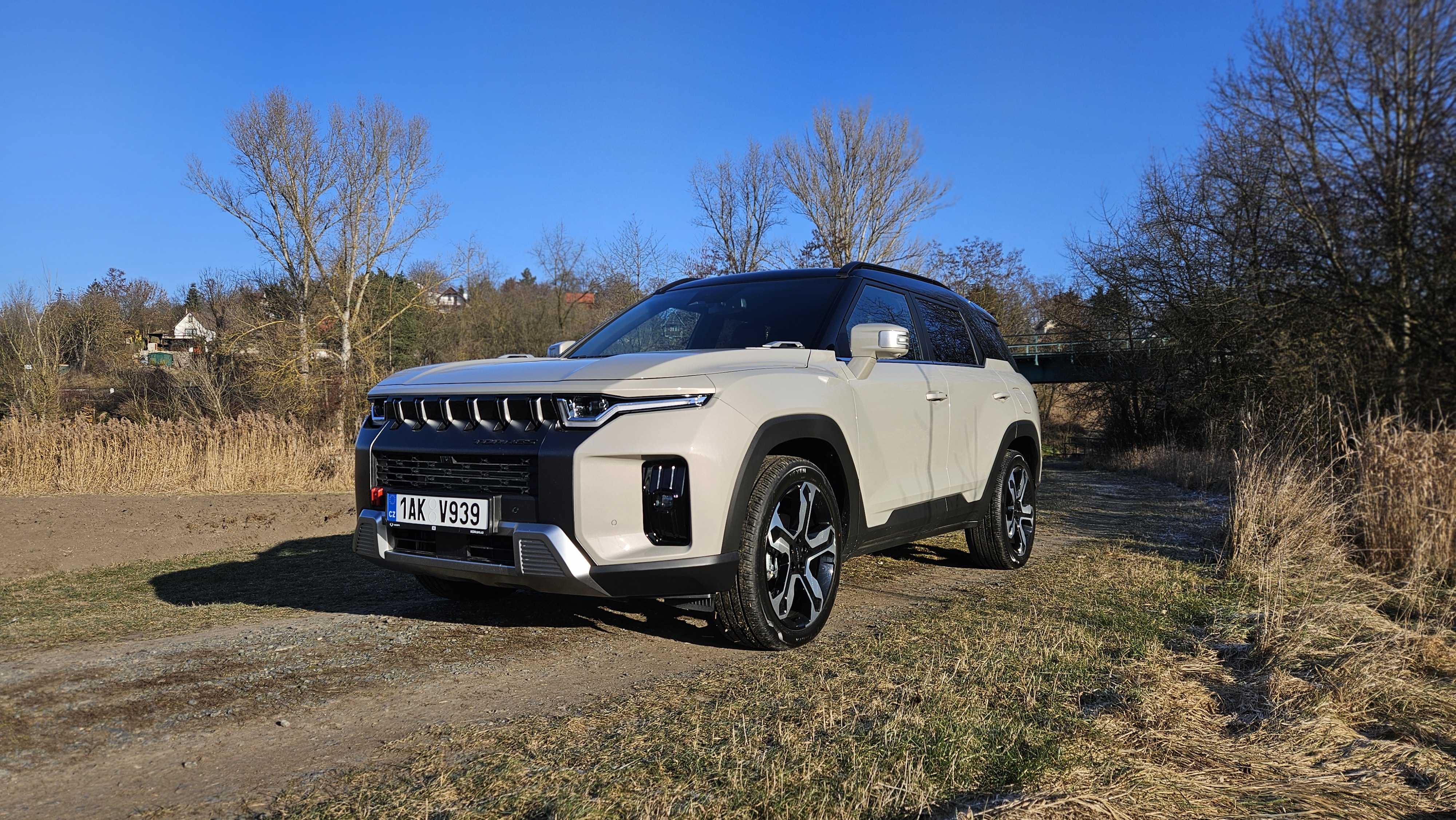
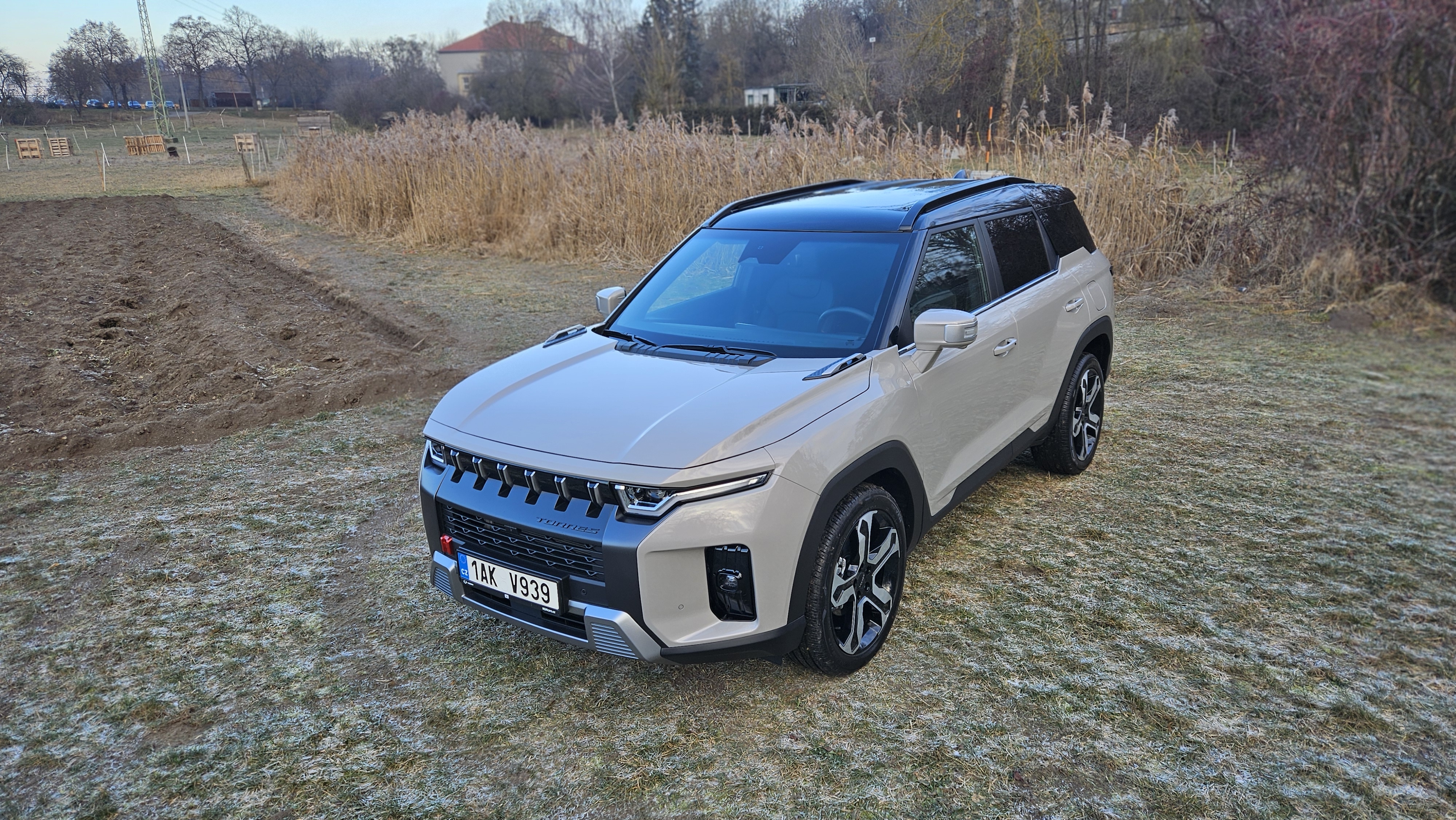
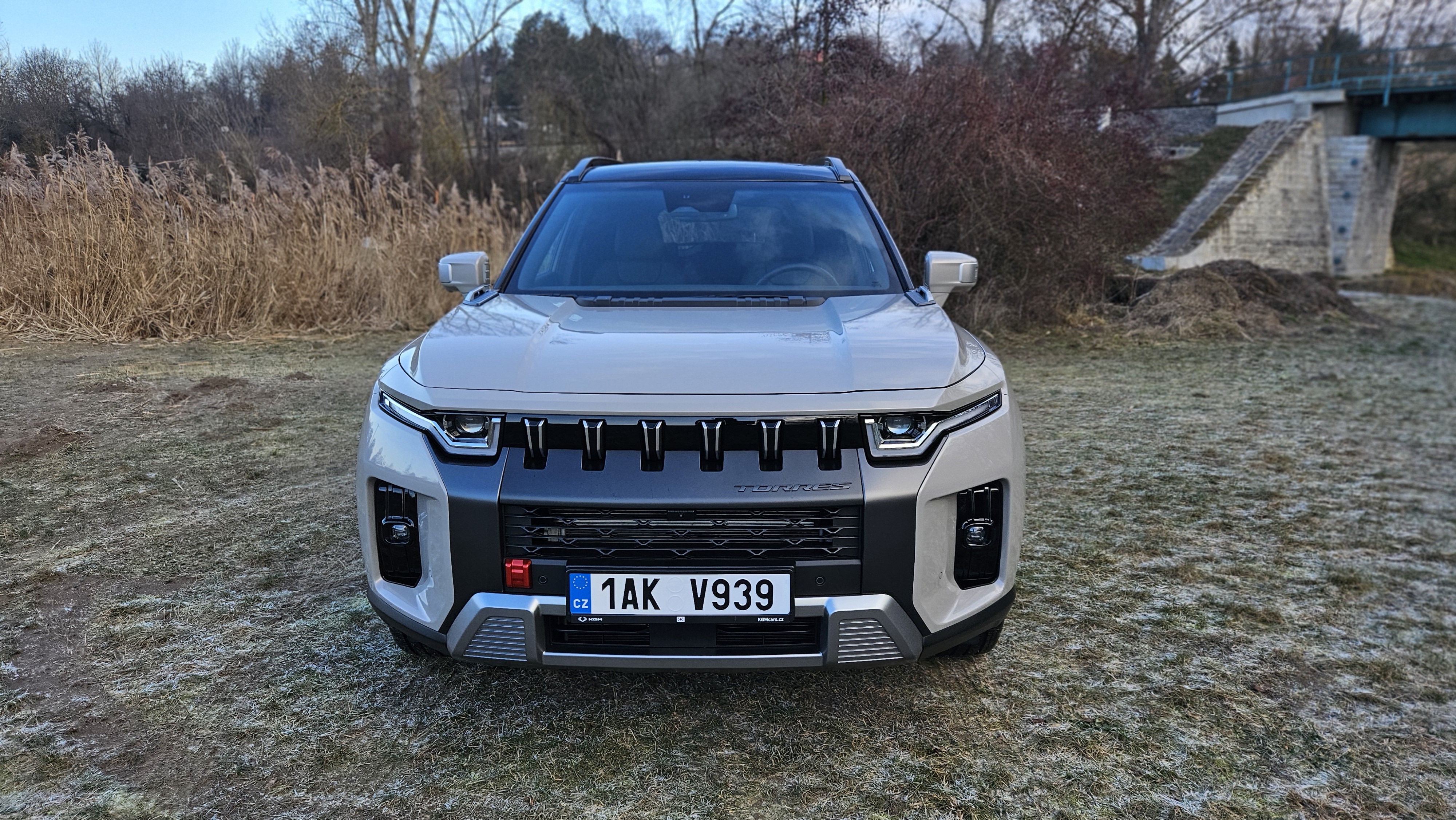
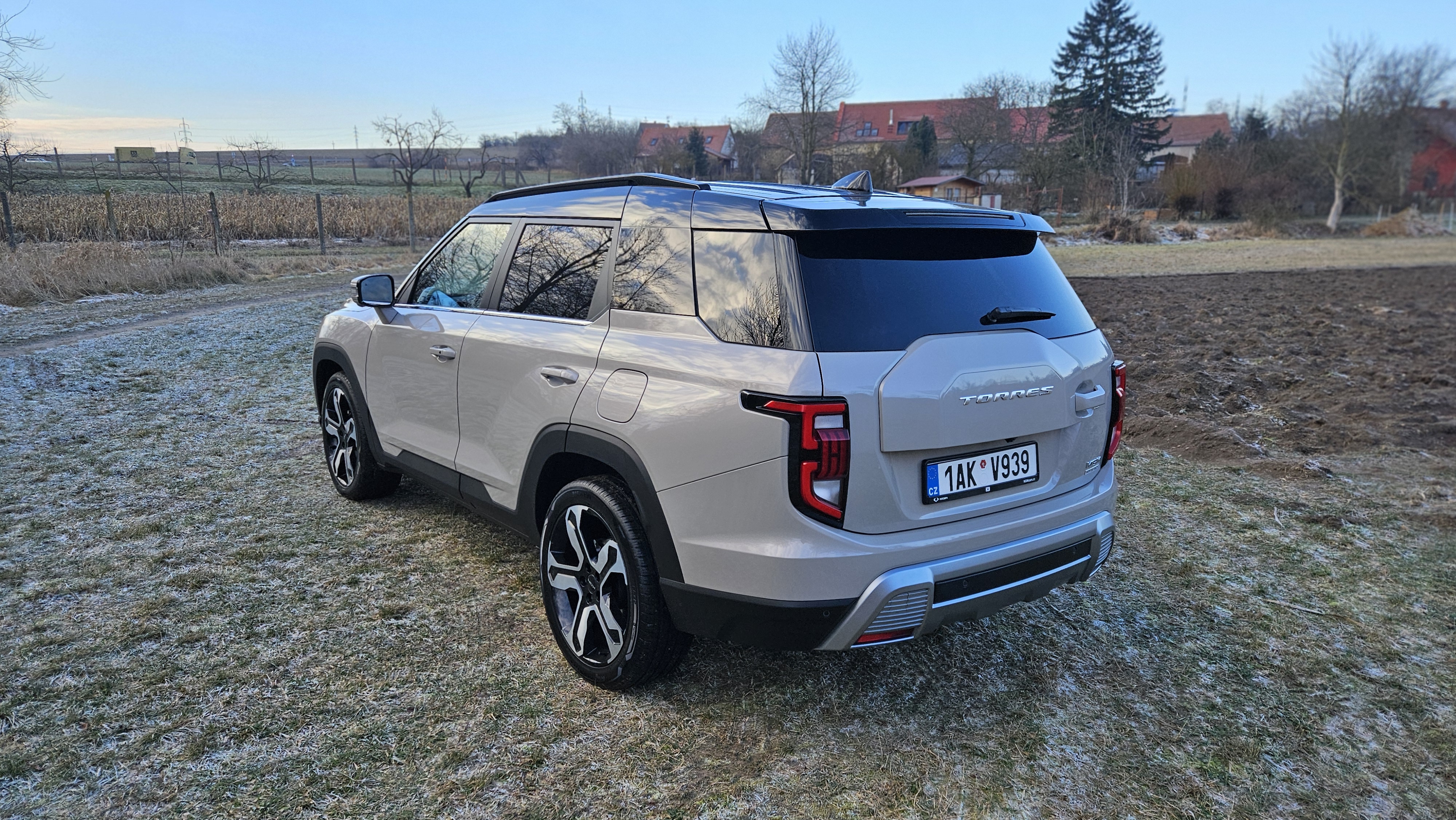
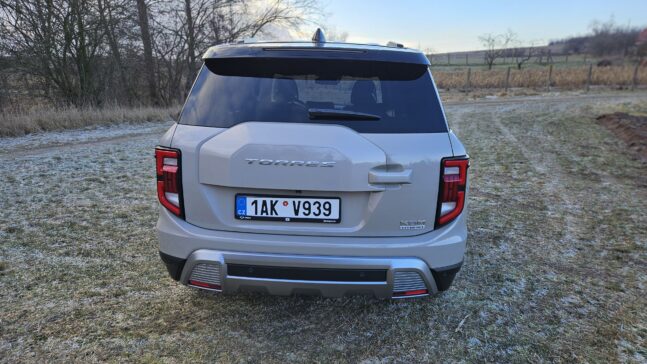
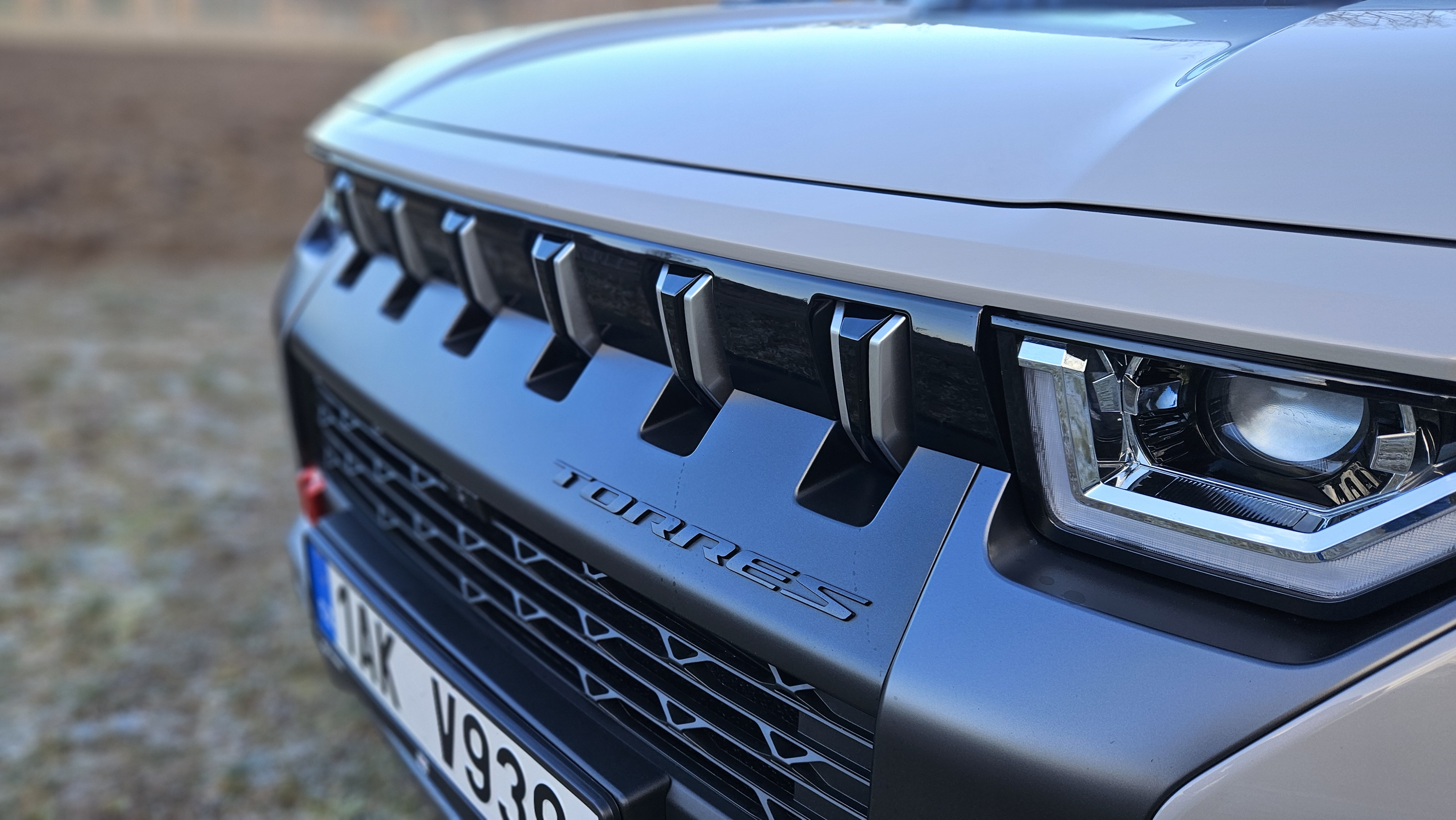
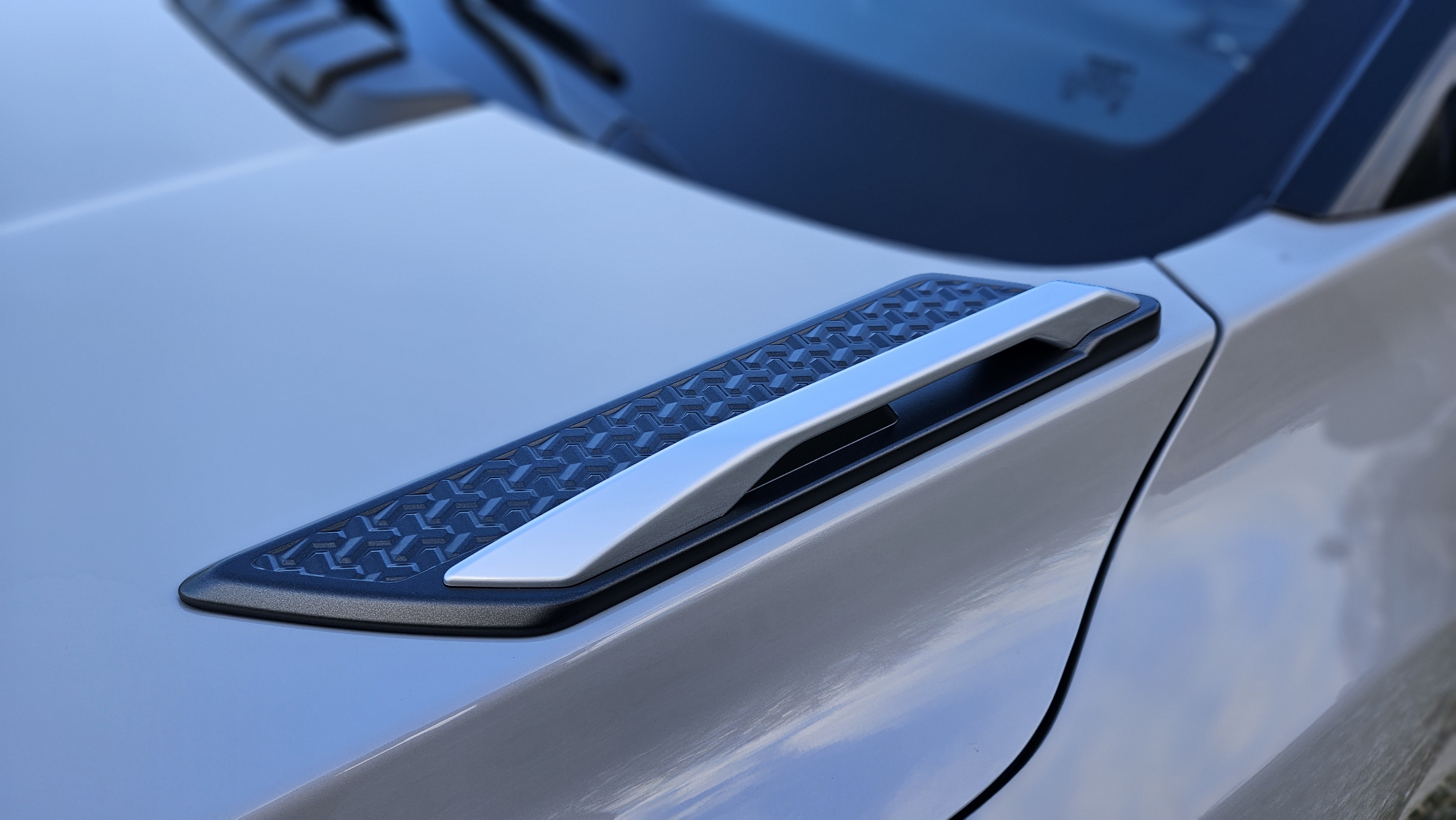
The Torres, named after a Chilean national park, retains its attractive adventure-inspired design, which helps it stand out among the dozens of SUVs on the market. The off-road look is defined by sharp edges, slim LED headlights and a bold front grille. At the rear, there’s a striking design element mimicking an external spare wheel cover in the style of large off-roaders. The handle next to it might suggest that the tailgate opens sideways, but in reality it opens conventionally upwards. The handle placement will suit right-handed users more, and the tailgate itself doesn’t open particularly high.
The hybrid Torres offers the same boot capacity as the original combustion version with a spare wheel – 703 litres. The petrol version without a spare wheel offers 839 litres, almost the same as the previous-generation Škoda Kodiaq with its 835 litres. The current Kodiaq has increased boot capacity to 910 litres in the five-seat configuration. The hybrid Torres always comes without a spare wheel, using only a tyre repair kit, and much of the underfloor space is taken up by the hybrid battery, leaving just a small storage compartment beneath the floor.
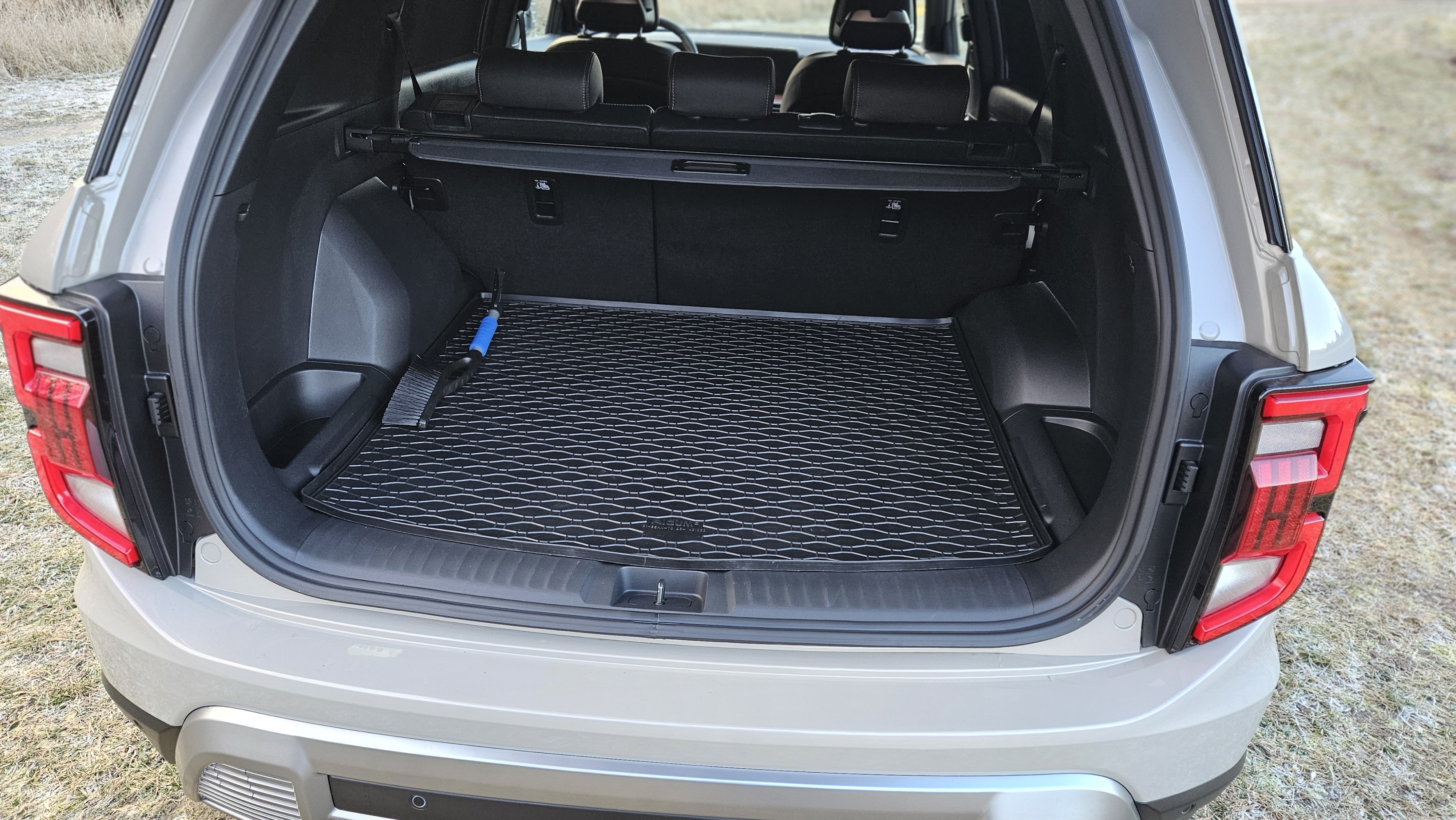
The boot itself is large, wide and has a regular shape, but it lacks practical details. There are no cargo nets or tie-down hooks, and most notably, the rear seatbacks fold only in a 60:40 split, without a ski hatch or pass-through for long items.
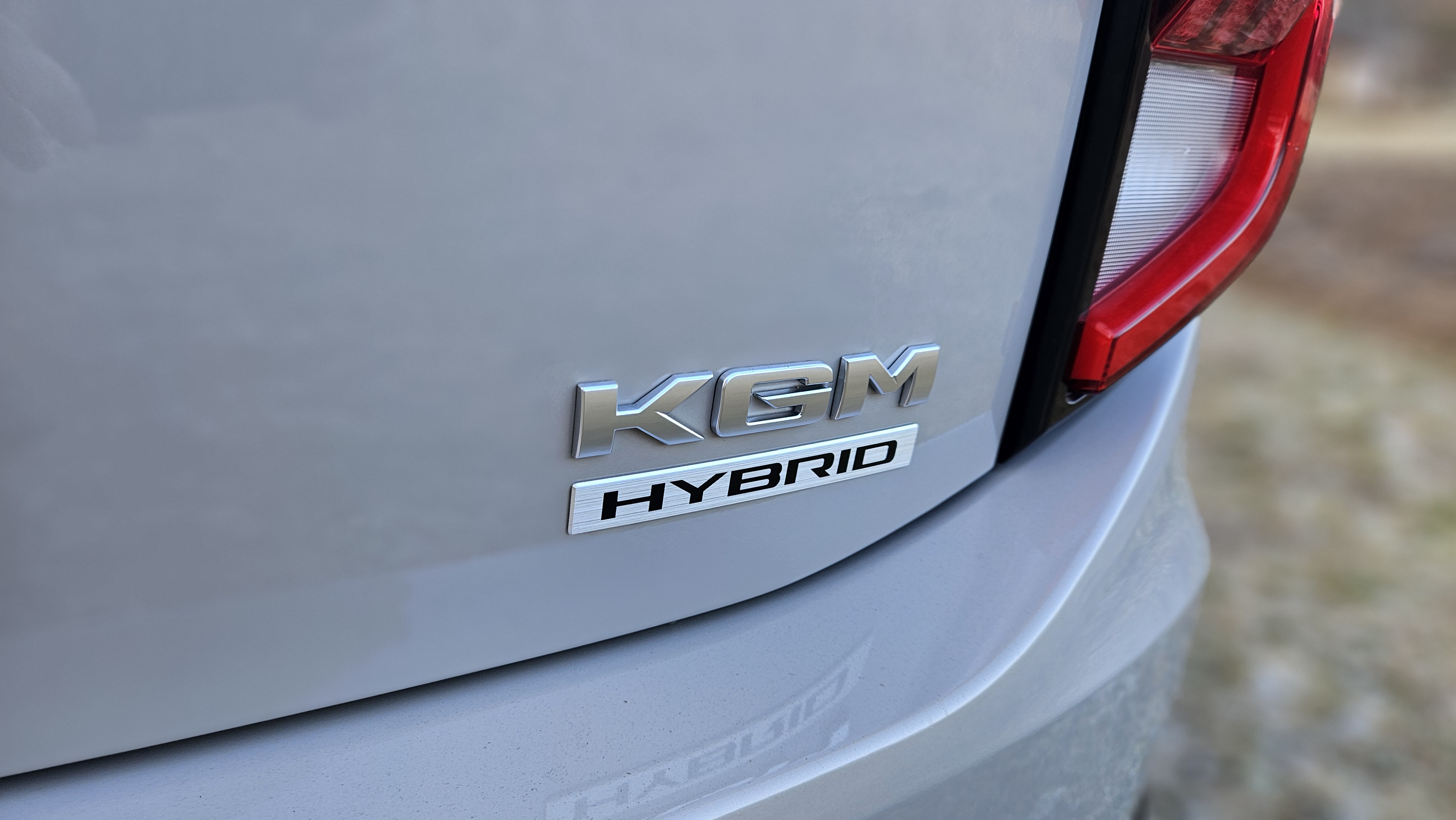
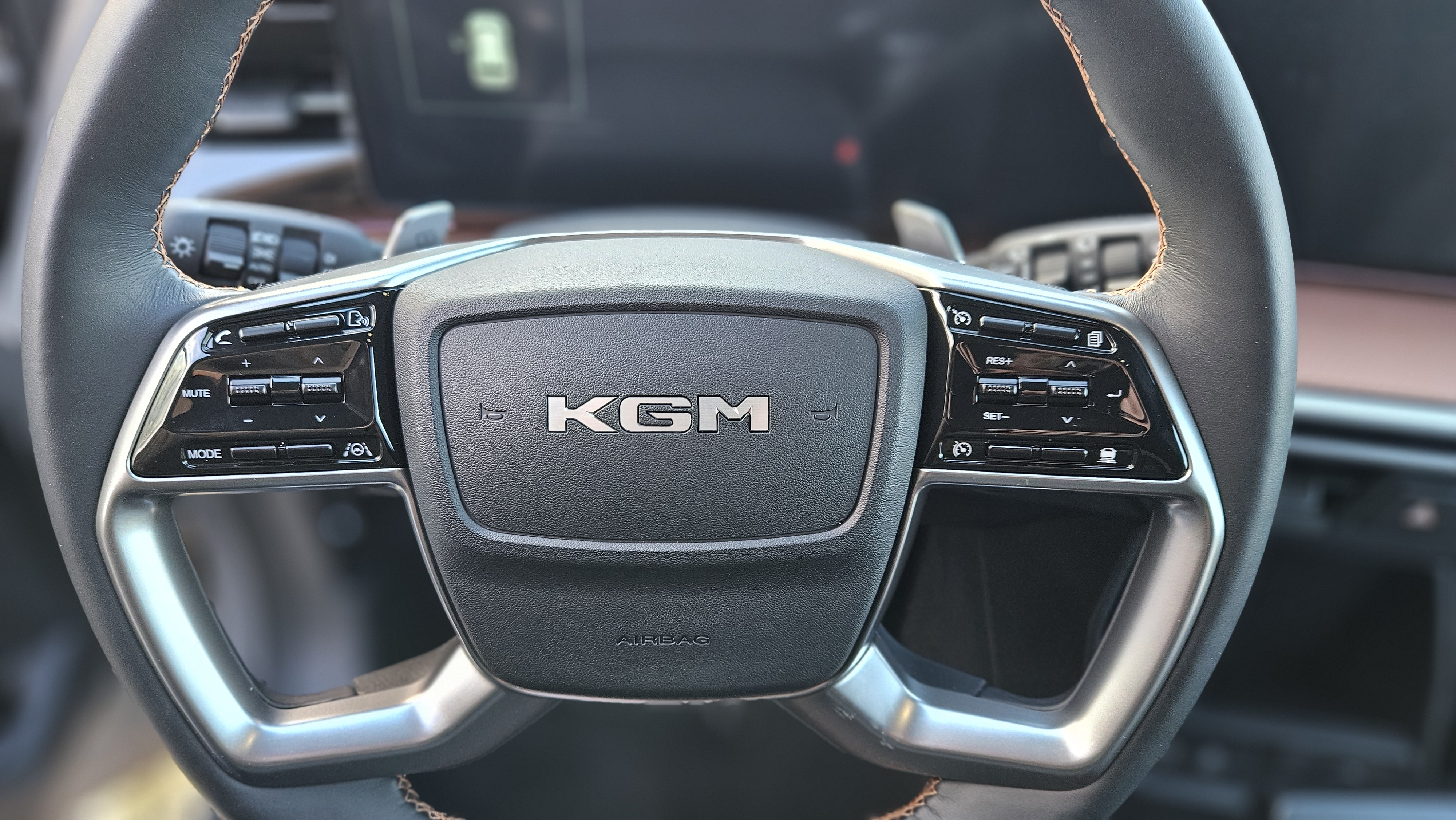
The new powertrain also brings changes to the interior and equipment. New features include a panoramic sunroof and the so-called Black Package, which adds black alloy wheels to the black exterior paint. Other updates include the new KGM wordmark replacing the dragon logo (for example on the steering wheel), a new Athena 2.0 infotainment interface, and, of course, new alloy wheel designs.
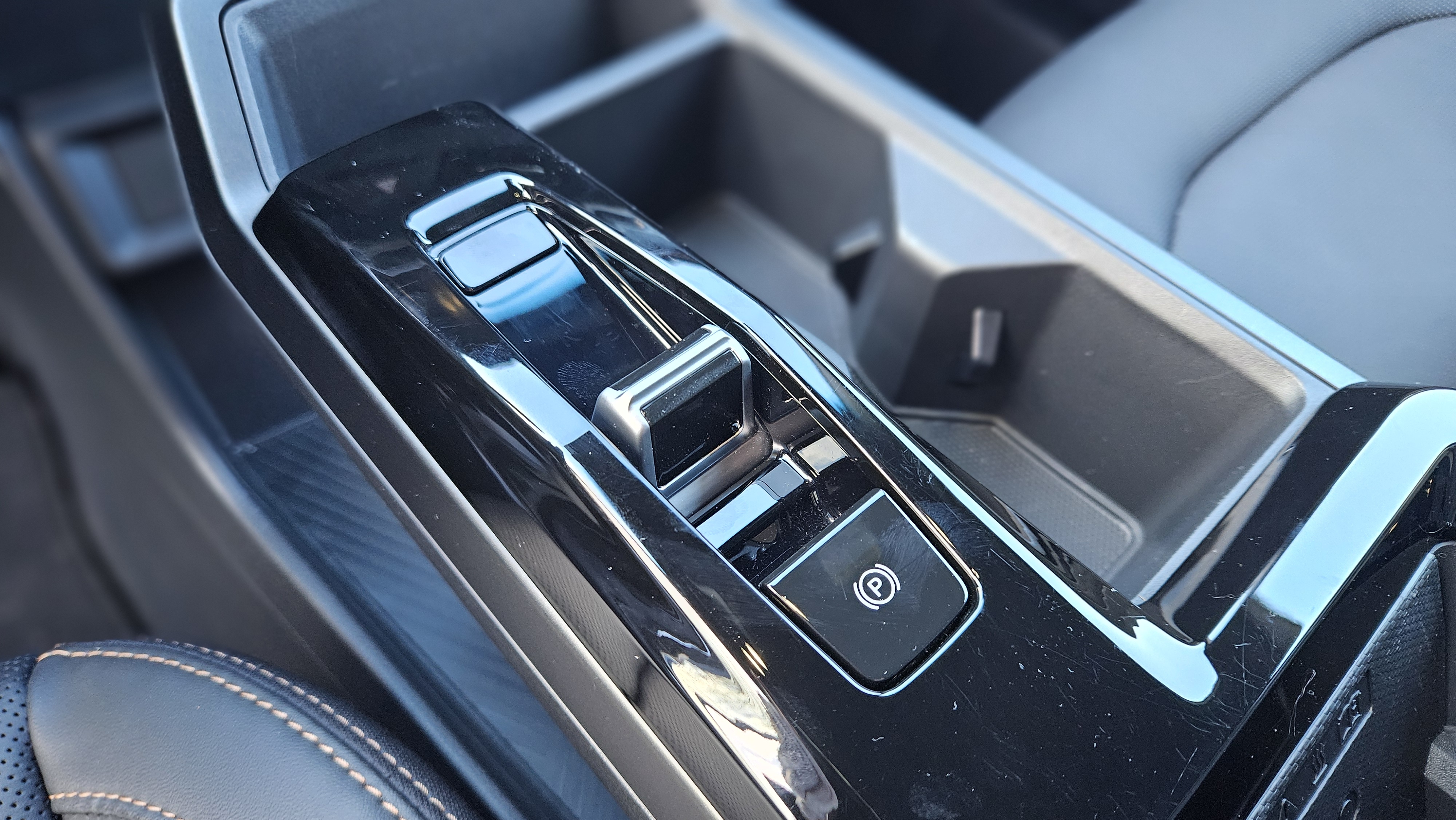
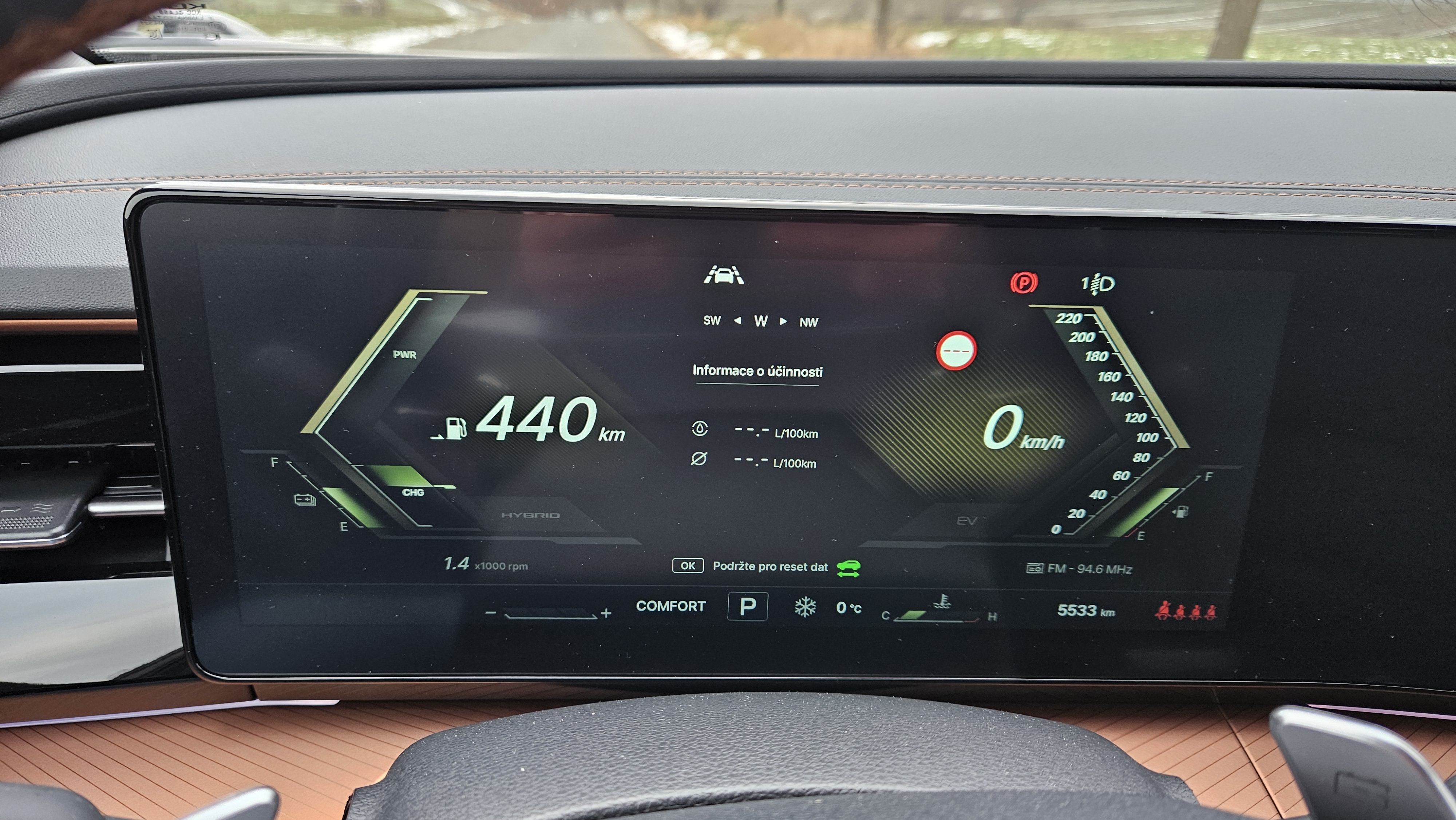
The original three-screen dashboard layout – with two screens stacked vertically in the centre – has been replaced by the now common setup of two 12.3-inch displays visually connected into a single panel. There is also a new automatic gear selector on the centre console, which looks much better and makes the interior feel airier. Considering the price, the overall impression of the interior is very good and feels high quality.
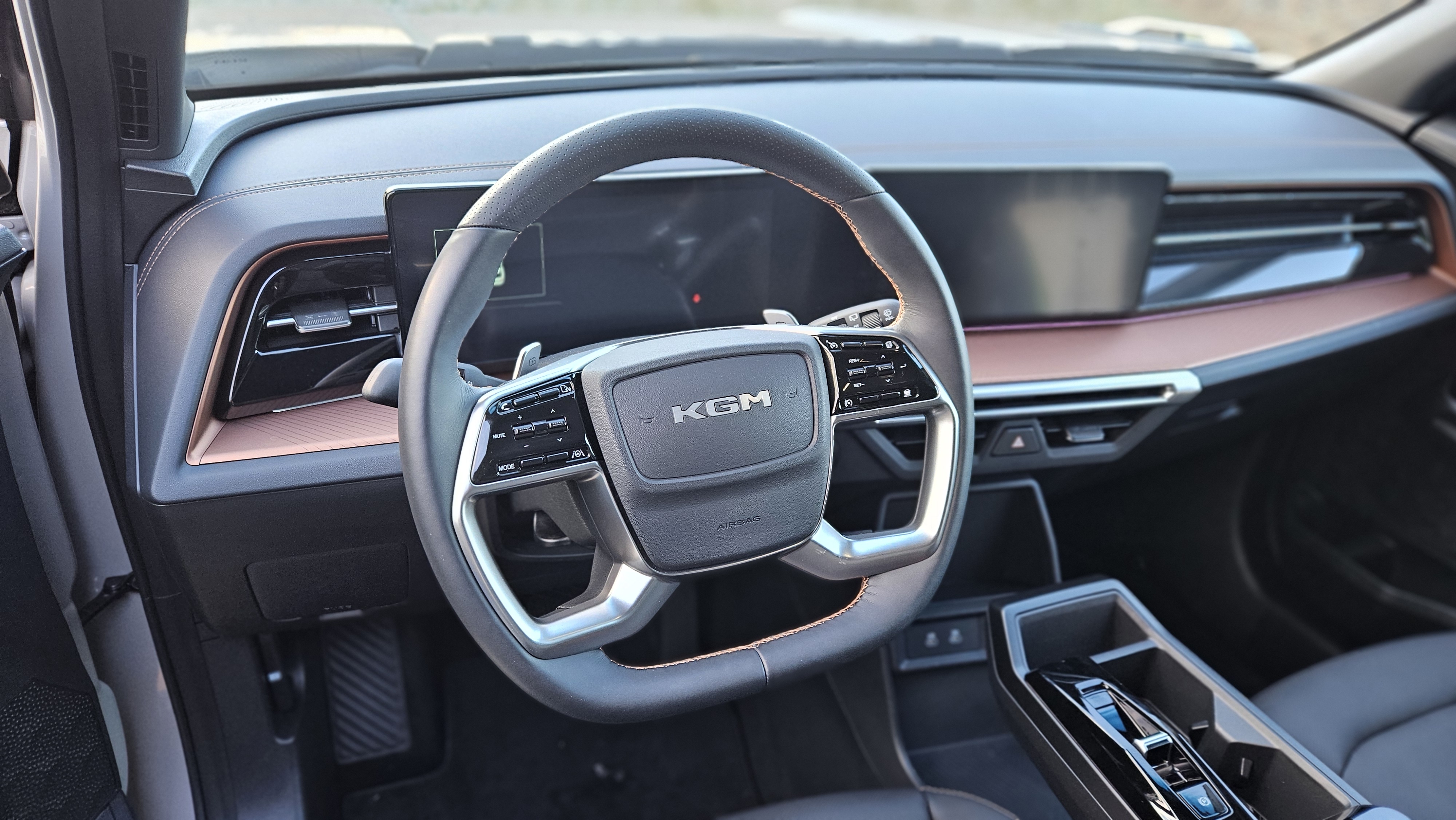
The dashboard now looks modern, like most cars today, but also suffers from the usual downsides. Physical buttons are kept to a minimum, with almost everything controlled via the central touchscreen, which isn’t exactly the fastest in terms of response. There are a few digital shortcut buttons – for example to disable traffic sign recognition via a special menu accessed by swiping down from the top of the screen – but some details were overlooked, such as the hazard light switch not being illuminated at night. Early user reviews also complain about the mediocre audio system. On the positive side, the panoramic parking camera system stands out for both functionality and graphics, although it comes at an extra cost.
The KGM Torres is not perfect, but it looks distinctive, is spacious, attractively priced – and it has finally fixed its biggest flaw.
Martin Šidlák
Technical Specifications: KGM Torres Hybrid
Petrol hybrid powertrain
Maximum output: 150 kW
Maximum torque: 300 Nm
Top speed: 180 km/h
0–100 km/h acceleration: not specified by manufacturer
Combined fuel consumption: 5.9–6.1 L/100 km
CO₂ emissions: 133–139 g/km
Length / width / height: 4,705 / 1,890 / 1,720 mm
Wheelbase: 2,680 mm
Boot capacity: 703 litres

